
The 3 Fs of Retirement
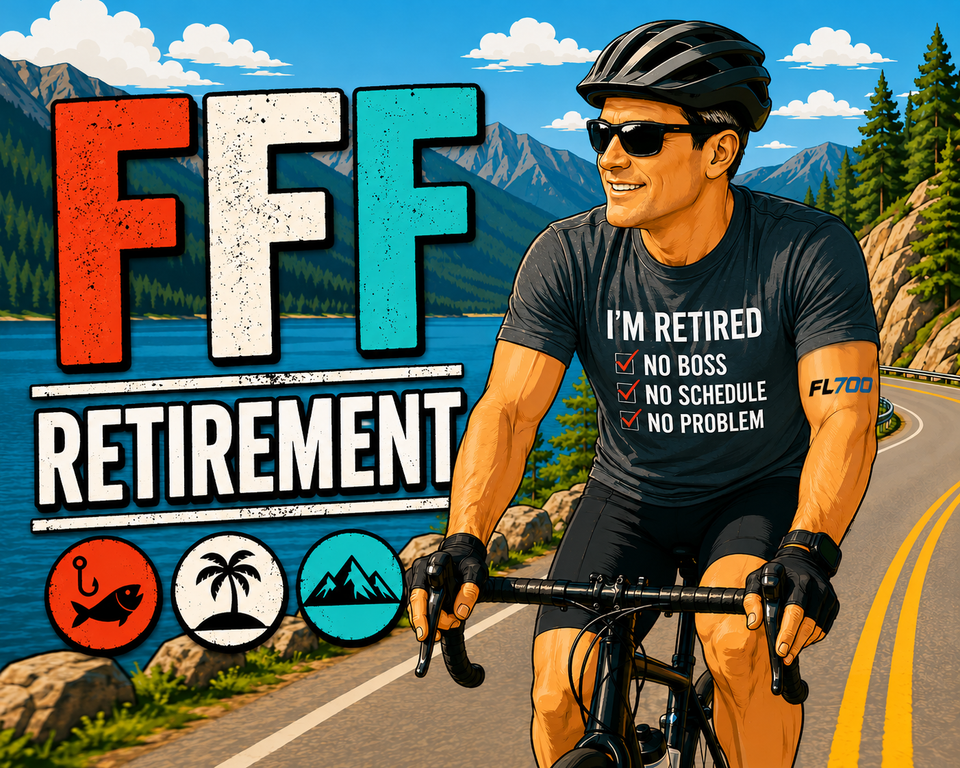
I retired from the Air Force in 2010 at the age of 43 and moved my family to Florida. In 2016, at the age of 50, I started a successful e-commerce business. When it became essentially a full-time job in 2020, I outsourced much of the day-to-day work to a local Jacksonville company. I now manage the business part-time as needed.
Along the way I had fun challenging myself and accomplished things like graduating first in my class from a five-month police academy and winning two High Military National Championship titles in Action Pistol competition. But the accomplishment I'm most proud of—and the one that has brought me the greatest joy—is raising two of the best kids on the planet.
Looking back, it's a little surprising to realize that I actually retired at 43 - and have been doing pretty much whatever I want ever since. Cool.
I have come to realize that my time in retirement is largely divided among three main areas: fitness, finance, and fun - the 3 Fs.
Fitness
Congratulations, you made it to retirement. Your new job is to stay alive, mobile and mentally sharp for as long as possible so you can actually enjoy this chapter of life that you worked so hard for.
The importance of fitness really clicked for me in December 2023. That's when my son Daniel gave me a book for Christmas: Outlive: The Science and Art of Longevity by Dr. Peter Attia.
The book explains that your goal should not simply be to live longer (lifespan), but also to maximize your healthspan—the years of life spent healthy, physically capable, and cognitively intact.
Lifespan is often shortened by heart disease, cognitive diseases such as Alzheimer’s, cancer, type 2 diabetes, and other forms of metabolic dysfunction. Diet and exercise - especially cardiovascular exercise such as walking and running - are incredibly important for reducing these risks.
But the threats to healthspan are different and the loss of muscular strength is one of the biggest. After age 30, we can lose about 10% of our strength per decade, and that decline can accelerate after age 50. Adequate protein intake and strength training are two of the most important keys to maintaining as much strength as you can so you can remain active and independent throughout retirement.
The harsh bottom line is that if you are not physically active, you will likely have fewer years to enjoy retirement, and those years may be more difficult.
Outlive: The Science and Art of Longevity provides a practical roadmap for protecting and improving the most important asset you'll have in retirement: your health. I highly recommend it.
Here's a tip. Whether you are a gym rat, a couch potato, or somewhere in the middle, get a DEXA scan. I did, and seeing how my body fat percentage and muscle mass compared against my peers was incredibly motivating. A DEXA scan can be a powerful tool for motivating you to get fit—and stay fit—because the numbers are difficult to ignore.
VO₂ max testing is something I also had done during my assessment. According to Dr. Peter Attia, VO₂ max, which is a measure of your body's ability to use oxygen, is highly correlated with longevity. Generally, the higher it is, the better. Vigorous cardiovascular exercise is one of the primary ways to improve it.
Finance
I read a lot, and much of that reading revolves around the financial issues that affect retirement. It's become something of a hobby. No matter where you are financially, here are some tips that may help you to navigate retirement.
Social Security
If you are like most people, you will claim Social Security at some point. If you are married, your spouse will likely do the same. The age at which you begin collecting Social Security is important because it affects how much money you get, not only each year, but over your lifetime.
Each year that you delay Social Security past age 62, the amount you receive increases by about 8% per year. The million-dollar question is: When should you start Social Security? The answer, of course, is that it depends on your situation and your goals.
If your goal is to collect as much as possible over your lifetime, you will need a way to calculate your options. The best tool I have found is this website: OpenSocialSecurity.com
By entering your personal information, the site will calculate everything from annual benefits to the total amount you could collect over your lifetime for different claiming ages.
It will identify the claiming strategy projected to produce the highest lifetime benefit for you and your spouse. It also allows you to try different combinations of claiming ages to see the difference.
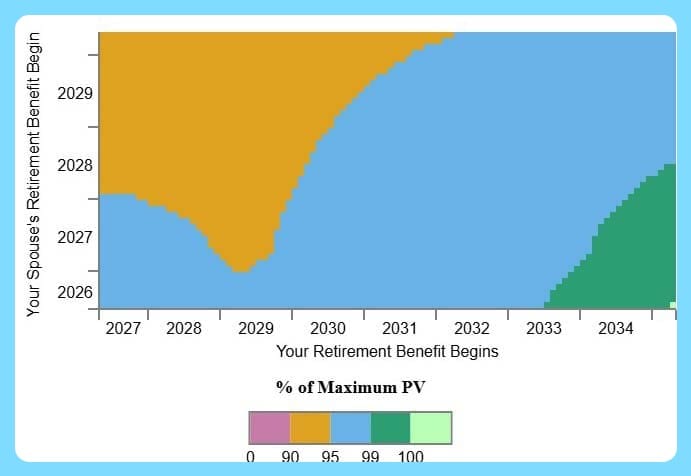
For most married couples in most situations the common advice is for the lower wage earner to claim at 62 while the higher wage earner delays until age 70. But your situation may be different, so run the calculator using your own information before making a decision.
It's also true that the difference between the best and worst claiming strategies is often no more than 5% to 7% in total projected lifetime benefits.
That is useful to know because maximizing lifetime benefits is not everyone's goal. Many people just want to start Social Security at a time of their own choosing, often when they are leaving the workforce and starting retirement.
Financial Advisors
I won’t sugarcoat it—many financial advisors operate under serious conflicts of interest.
Many financial firms and the advisors who represent them are compensated through commissions, management fees, proprietary products, or other arrangements that can move money from your pocket into theirs. That does not mean every advisor is dishonest, but it does mean that incentives matter.
They will be nice, polite, and friendly. They may be very likable people whom you enjoy talking to and they may appear to have your best interests in mind.
Do not assume that their financial interests are automatically aligned with yours.
At a minimum, be extremely cautious of products such as whole-life and universal-life insurance policies, complex annuities, and mutual funds with high expense ratios.
Products with high costs, complex features, and significant commissions may benefit the person selling them more than the person buying them!
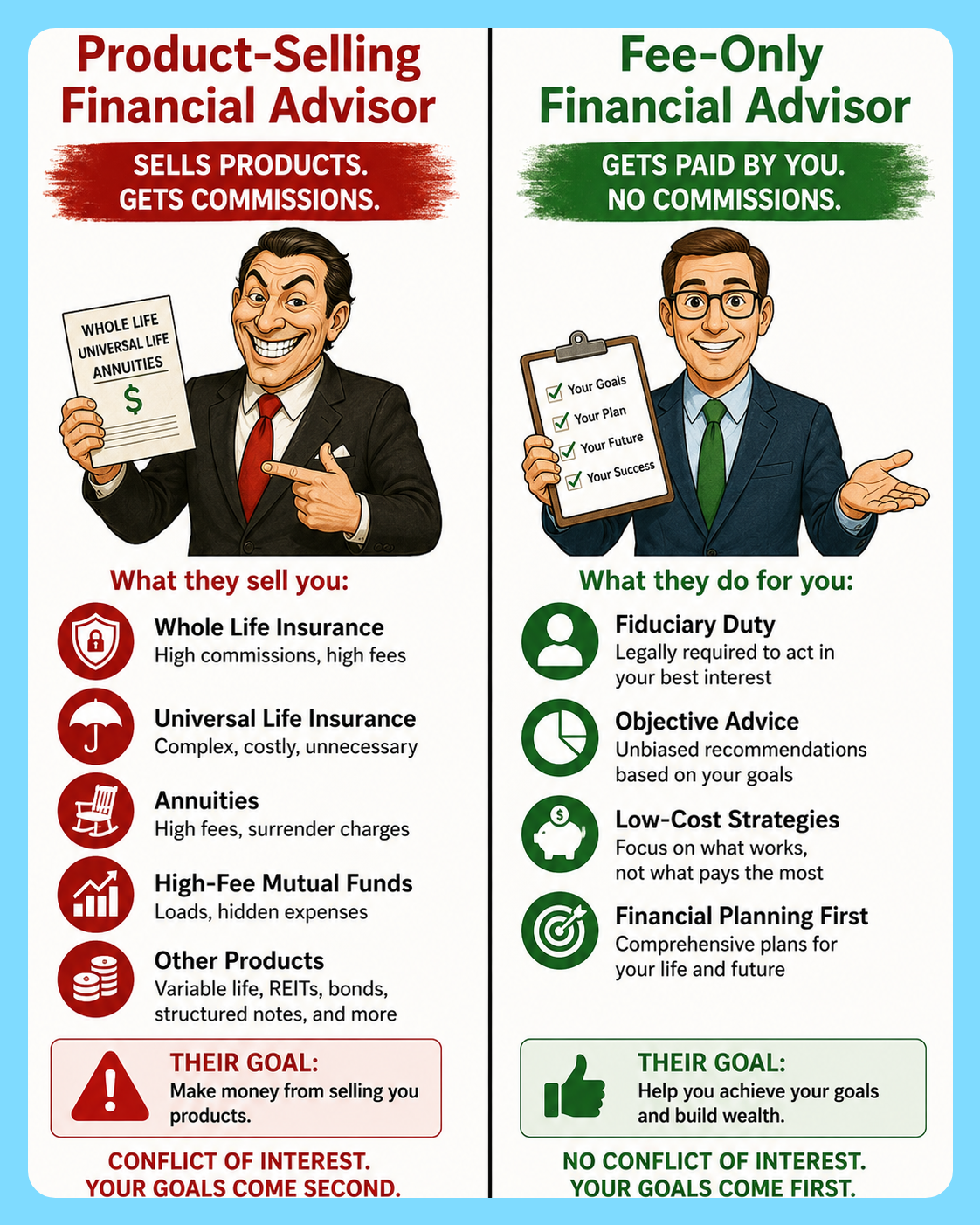
Your finances and your money are too important, especially in retirement. Before hiring an advisor, make sure you understand exactly how that person is compensated and whether they are required to act as a fiduciary.
If you need assistance, seek out a fee-only fiduciary advisor. Better yet, consider managing your investments yourself. For many people, a simple investment strategy is manageable with help from online forums such as Bogleheads.org and educational content from creators such as Ben Felix and others on YouTube.
My own ignorance led me to trust advisors in the past because I didn’t know any better. It was a very expensive mistake that I do not want you to make.
Fun
Finally, the fun part! As the saying goes, "If you're not having fun, you're probably doing it wrong." This is especially true in retirement.
With some exceptions, fun generally requires three things: time, money, and mobility.
Time is usually abundant in retirement. Money is different for each person, but everyone has to live within their means.
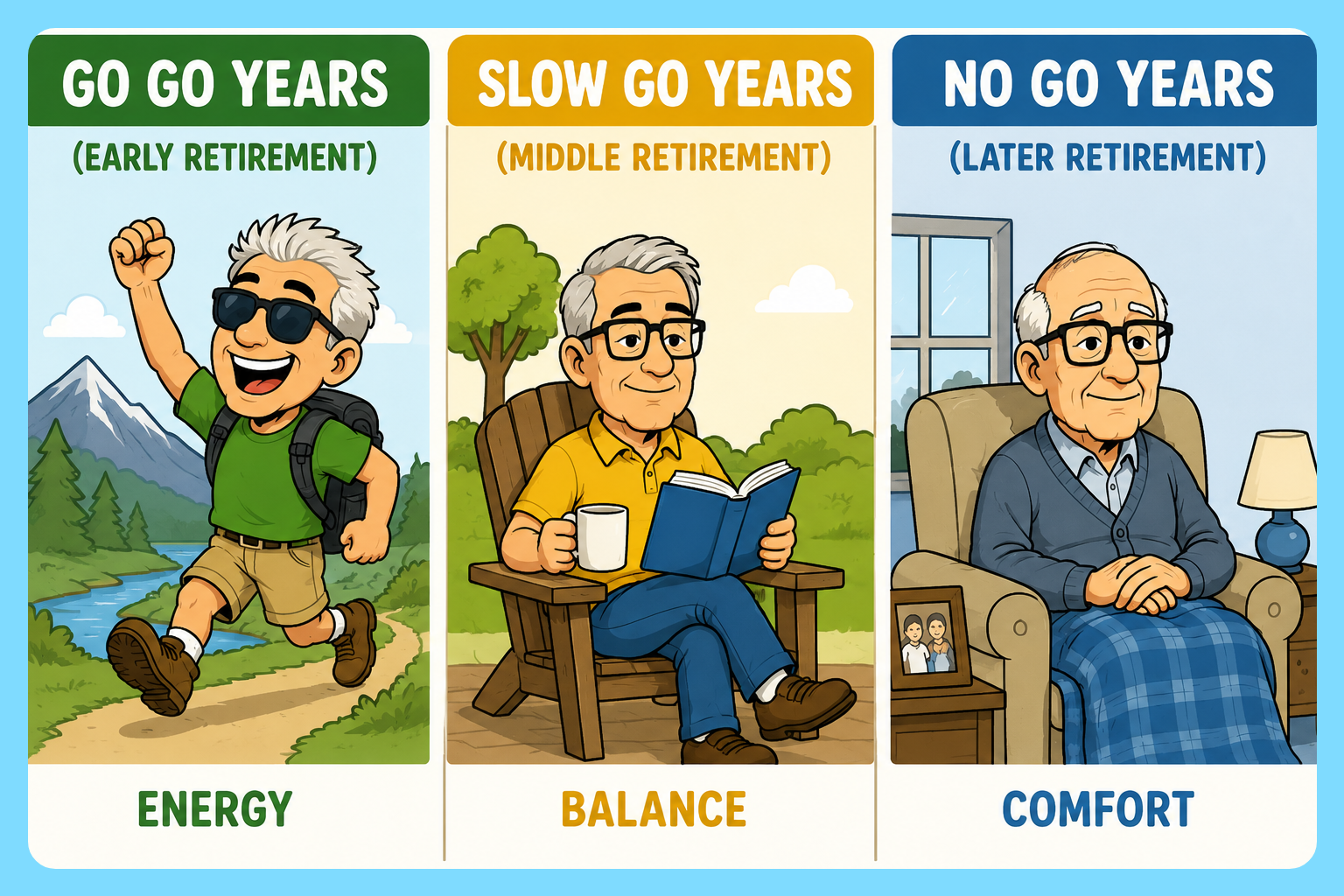
Mobility, however, is what eventually sneaks up on us. For that reason, it's not a bad idea to front-load your retirement with the things you want to do that require good mobility.
Die with Zero
I plan to never die, much less die with zero! But the book Die with Zero by Bill Perkins is a must-read, in my opinion. He presents a well-thought-out perspective on how to get the most out of your money, your time, and your life by prioritizing experiences and spending money to make those experiences happen.
People who are frugal and disciplined savers throughout their lives often remain savers in retirement. They may struggle to flip the switch and begin spending the money they worked so hard to accumulate.
The book does an excellent job of exploring that challenge, along with many other issues related to balancing saving, spending, time, and life experiences.
Highly recommended for everyone, especially young people with most of their lives ahead of them!
That's my 3 Fs. At any given moment, I'm probably enjoying one of them.
Now I’m off to the gym. See ya!